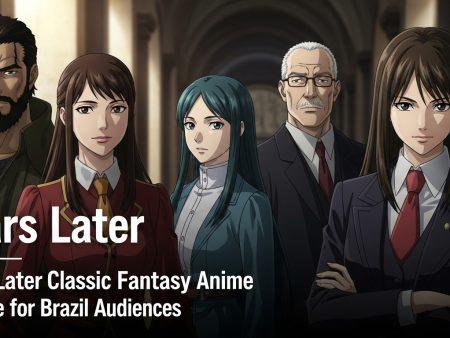
Near-Perfect Manga Never Get Anime: A Brazil-centered analysis of why some highly regarded manga struggle to receive anime adaptations, separating confirmed.
desenho-br.comBrazil anime news and review guides.
Near-Perfect Manga Never Get Anime: A Brazil-focused Analysis
Updated: March 18, 2026
In the Brazilian anime discourse, the phrase “Near-Perfect Manga Never Get Anime” captures a stubborn paradox: works celebrated for storytelling and craft often do not reach an anime adaptation. This analysis examines what is known, what remains unconfirmed, and what Brazilian readers can trust about this trend, while keeping the discussion grounded in verifiable reporting and observable industry dynamics.
What We Know So Far
Confirmed: There is currently no official announcement that any specific title widely regarded as a peak in storytelling will receive an anime adaptation. This is a status observed across trade coverage and fandom reporting, not a statement from a single producer or studio.
Industry context suggests that adaptation decisions are guided by a combination of licensing rights, projected audience reach, production costs, and the strategic priorities of studios and streaming platforms. While these factors have been discussed in trade circles, they are not publicly itemized for each title, and specifics remain undisclosed in most cases.
- Confirmed: In 2026, some manga outside the core “near-perfect” roster did move into anime production, illustrating that the ecosystem still yields confirmed adaptations when the business case aligns. For example, a title by Manabu Yashiro was announced for an anime in Fall 2026, signaling ongoing market activity in this space.
- Unconfirmed (contextual): The precise barriers preventing the cited near-perfect works from advancing to anime — be they licensing hold-ups, rights ambiguity, or market risk calculations — remain privately negotiated and not publicly disclosed.
- Unconfirmed (regional lens): How much Brazil’s licensing, distribution, and streaming appetite directly shape these decisions is not publicly documented in formal briefs from studios or publishers.
Beyond the Brazilian scene, coverage of the broader industry shows a mixed pattern: some acclaimed titles stay unadapted, while others progress rapidly once a clear business case exists. This demonstrates that adaptation is a case-by-case outcome rather than a universal rule for highly regarded work.
What Is Not Confirmed Yet
- Unconfirmed: Whether any individual title discussed in fan and media circles will ever receive an official adaptation in the future.
- Unconfirmed: The exact impact of licensing costs and regional rights on Brazilian releases and platform decisions for these titles.
- Unconfirmed: Any foreseeable timeline for announcements tied to the most-cited works in the near-perfect category.
Why Readers Can Trust This Update
This update aims to reflect a careful synthesis of publicly reported information and ongoing industry patterns. We distinguish clearly between what is confirmed by public statements or official schedules and what remains speculative or based on industry commentary.
Readers should note that while some titles share a common reputation for excellence, the absence of a formal announcement is not proof of a permanent status. Coverage from outlets such as Screen Rant frames the discussion around a real-world phenomenon: highly acclaimed manga sometimes fail to transition to animated formats, at least in the near term. In parallel, industry reporting on 2026 adaptations demonstrates that the market remains active and capable of reshaping the landscape when a viable project emerges. For a concrete example of a 2026 adaptation, see the update on Tank Chair from Crunchyroll.
Actionable Takeaways
- Monitor official announcements from studios and licensing bodies for definitive adaptation news rather than relying on fan-due lists.
- Recognize that the absence of an adaptation can influence how communities discuss and engage with a title, including translations, reprints, and merchandise opportunities in Brazil.
- Engage with creators and publishers through sanctioned channels to express interest in adaptations while respecting licensing realities.
Source Context
The following sources provide framing for this analysis and demonstrate the range of industry coverage surrounding manga-to-anime decisions:
- Screen Rant: Near-Perfect Manga That Will Never Get Anime Adaptations
- Crunchyroll: Tank Chair manga gets anime in Fall 2026
- Anitrendz: From Far Away Manga Gets 2026 Anime
Last updated: 2026-03-19 07:38 Asia/Taipei
From an editorial perspective, separate confirmed facts from early speculation and revisit assumptions as new verified information appears.
Track official statements, compare independent outlets, and focus on what is confirmed versus what remains under investigation.
For practical decisions, evaluate near-term risk, likely scenarios, and timing before reacting to fast-moving headlines.
Use source quality checks: publication reputation, named attribution, publication time, and consistency across multiple reports.